Zataak Se Merchant App
Boosting local economies, one shop at a time! From grocers to florists. Read more to uncover how the Zataak Se Merchant App drives hyper-local growth and boosts revenue for every shopkeeper.
My Role
Product Designer — Interaction Design, Visual Design, User Flows, Wireframing, User Research,
Timeline & Status
March 2024 to May 2024
Tools


Problem
The founders of Zataak Se had a vision: enable local merchants like grocery stores, pharmacies, and florists to serve nearby traveling customers seamlessly. However, they faced significant challenges:
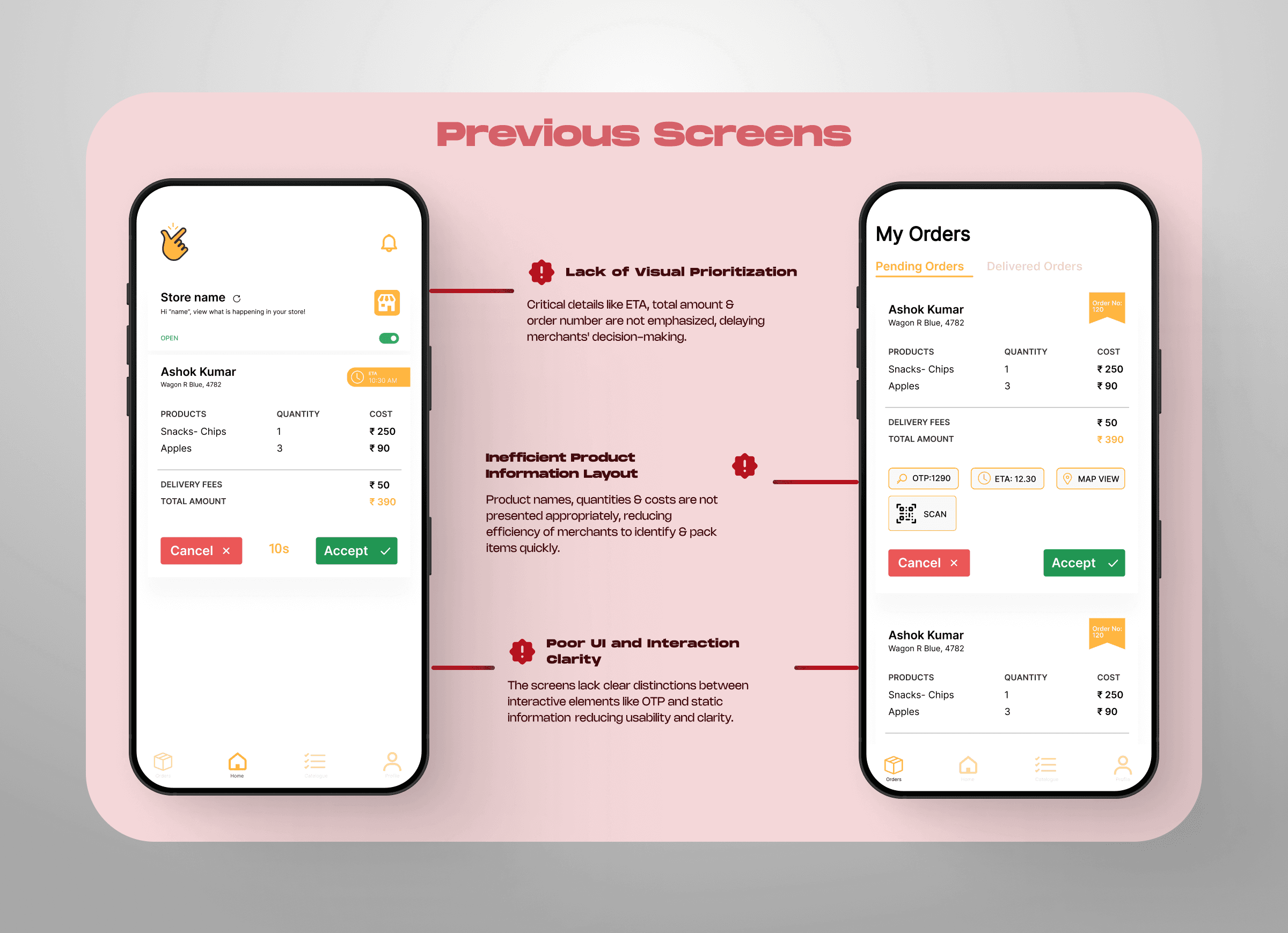
Fragmented Ecosystem: Incomplete Merchant App screens that failed to integrate with the Consumer App, causing functional gaps.
Core Challenges: Merchants struggled with cataloging products, accepting orders, and fulfilling them (handing over to delivery partners).
Digitization Barrier: Merchants lacked a system to digitize their catalogs and were unfamiliar with the process, making online selling nearly impossible. There was no self-serve tech or process to help them.
These issues hindered the business’s ability to launch an MVP, delaying potential revenue generation and jeopardizing their funding timeline. The end-users (merchants) faced unnecessary complexity, which could lead to low adoption rates.
Research
What I Did:
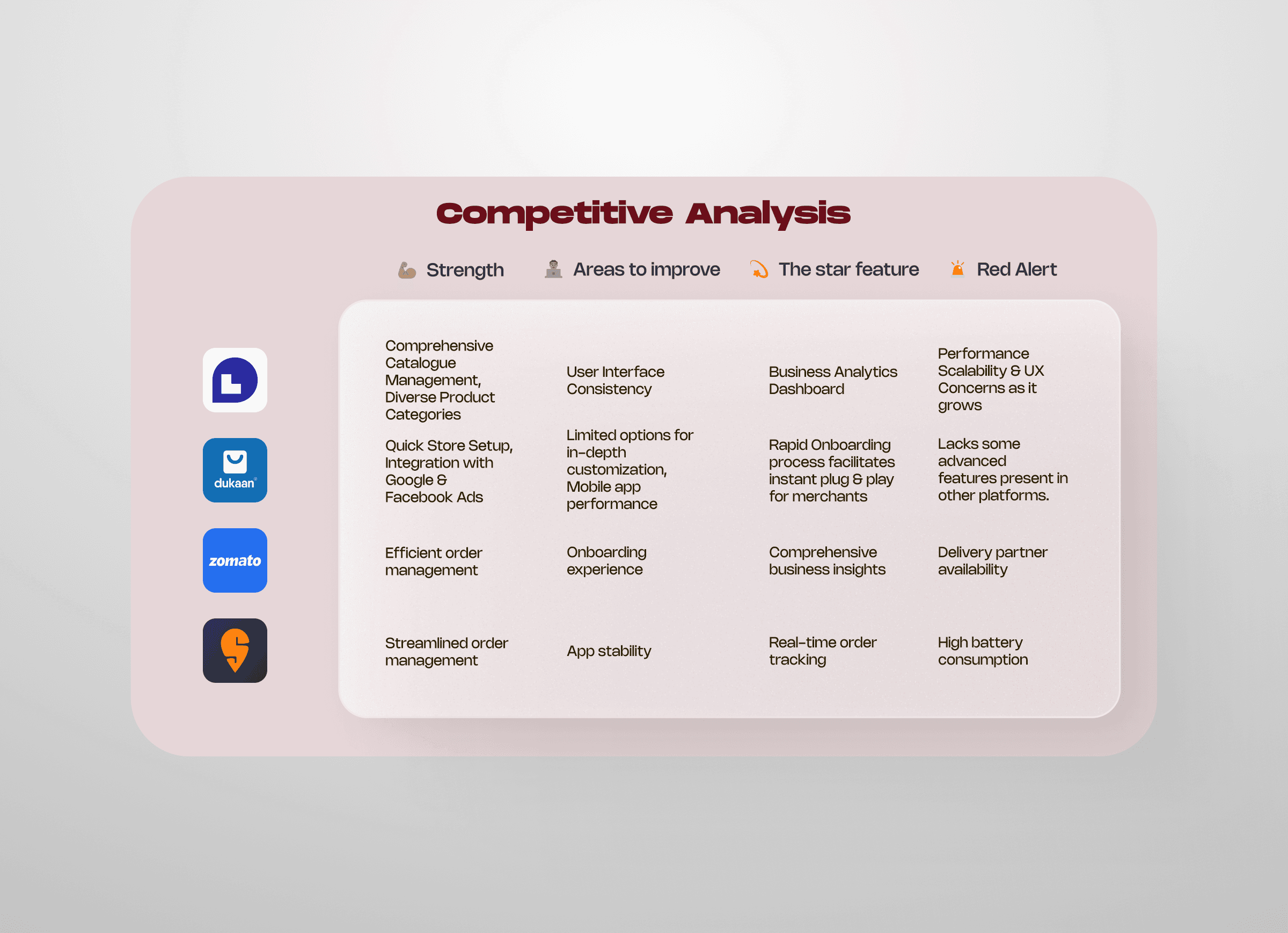
Conducted user interviews with 15 local merchants across diverse categories (groceries, snacks, dairy, etc.) and analyzed competitors like Dunzo, Swiggy Instamart, and BigBasket.
What I Found:
Merchants lacked systems to digitize their catalogs and didn’t know where to start.
Tracking order readiness and delivery coordination were major pain points.
Merchants desired a simple, time-efficient solution without the need for extra staffing.
Ideation
What I Explored:
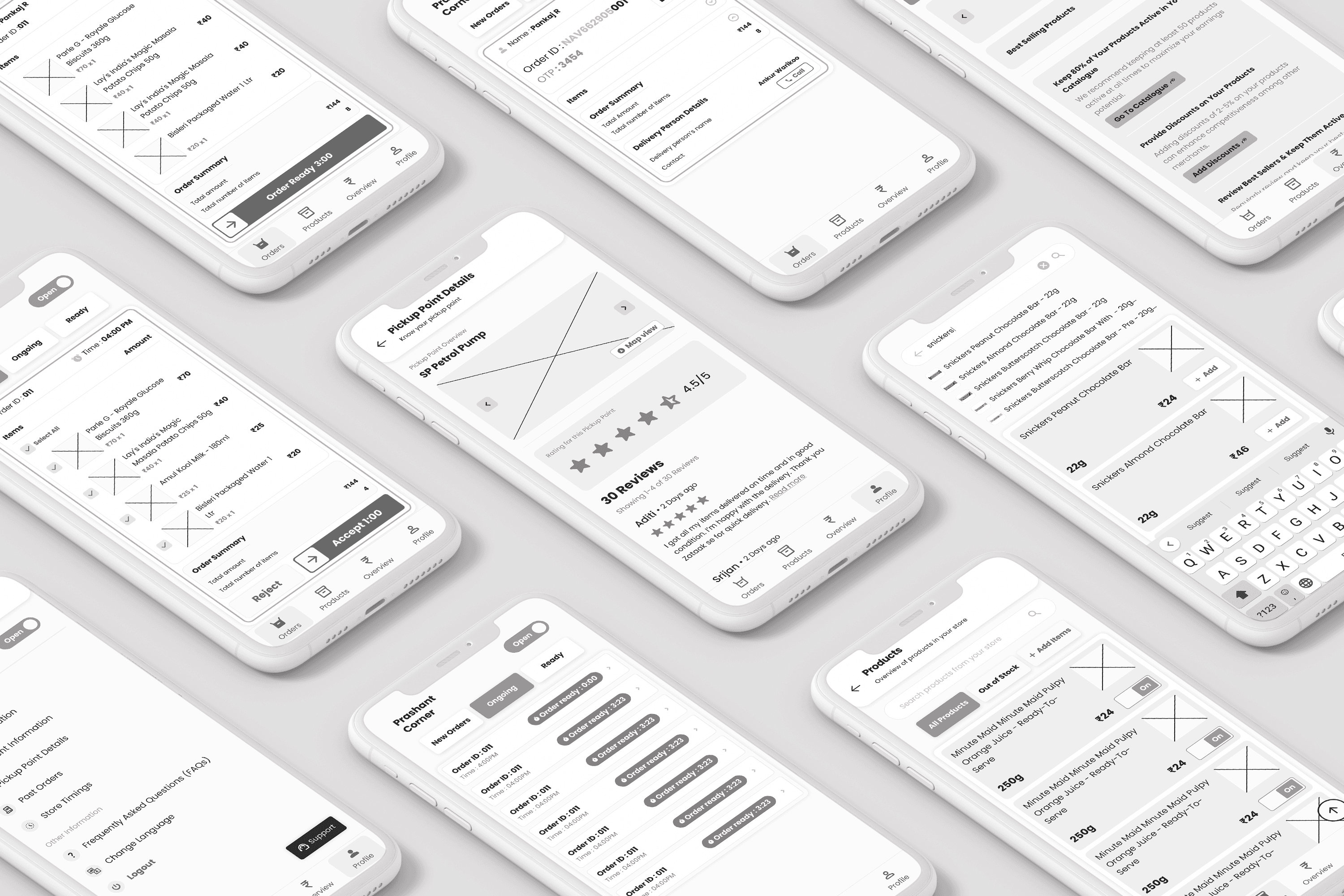
Low-fidelity wireframes to outline workflows for managing incoming orders, tracking statuses, and handing over to delivery partners.
Scenarios to address edge cases like partial order acceptance (for out-of-stock items).
What Guided My Decisions:
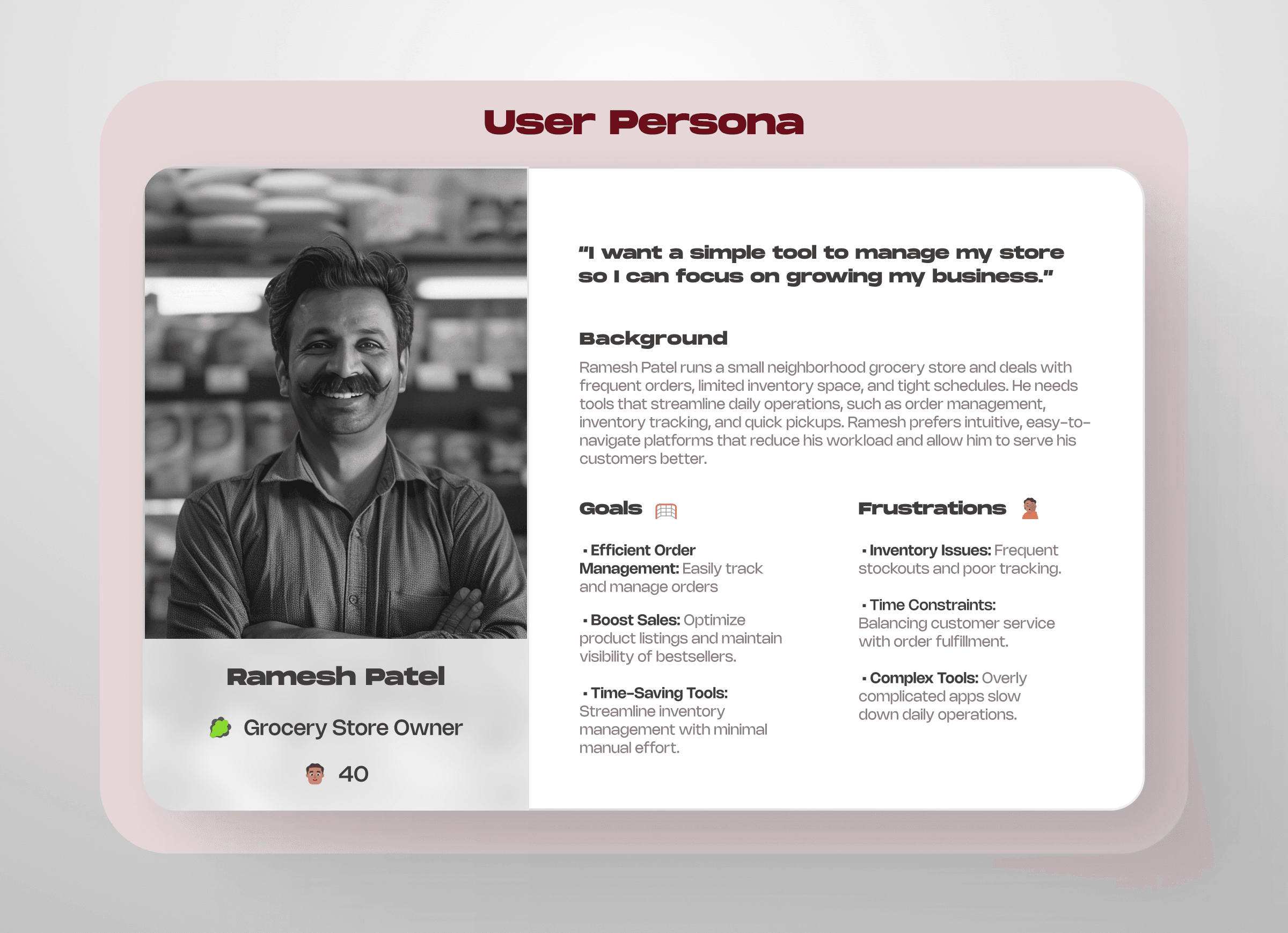
User personas created from research to map merchant journeys.
Insights into merchant behavior, prioritizing clarity and speed over feature overload.
Design
What I Created:
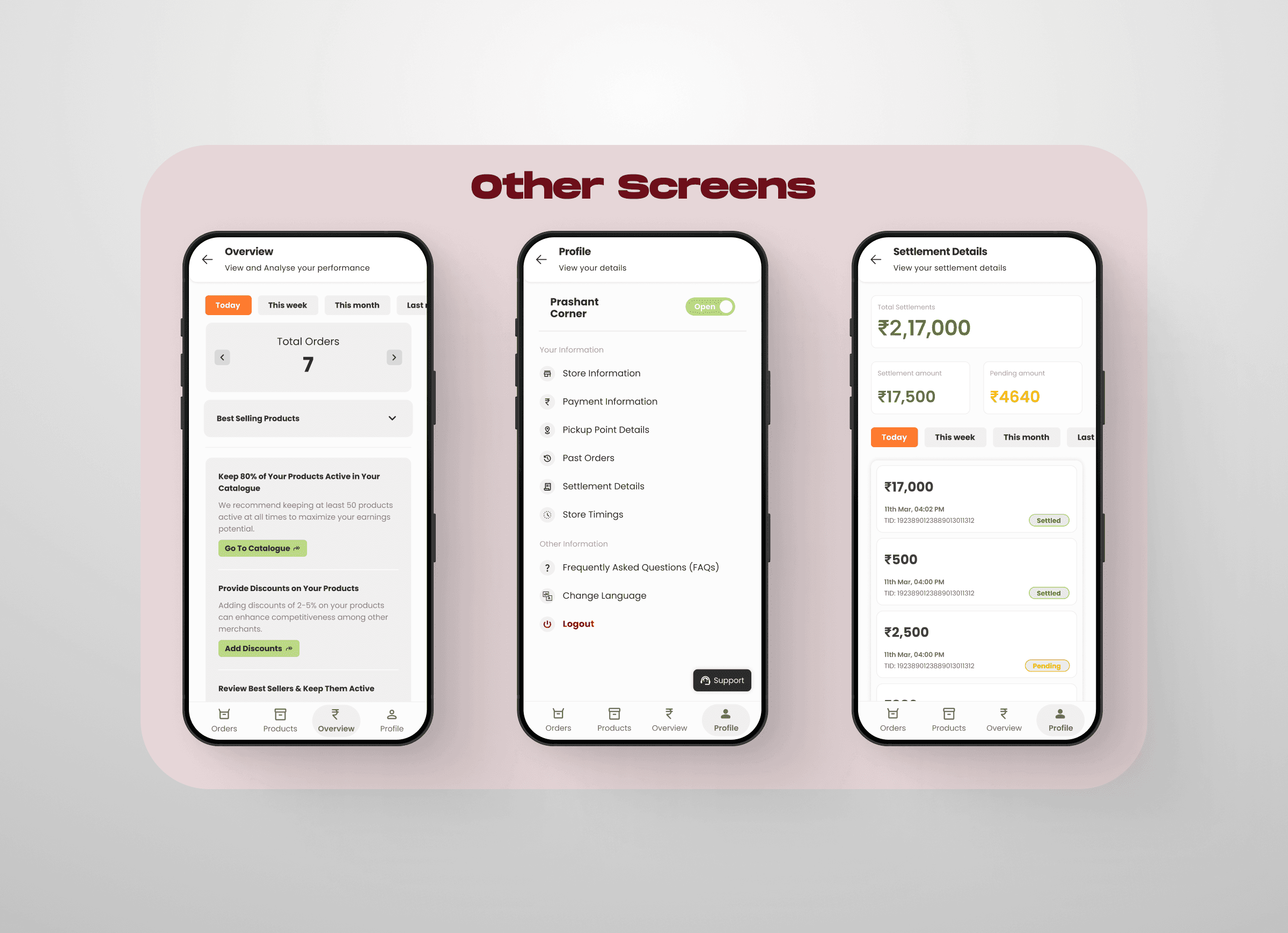
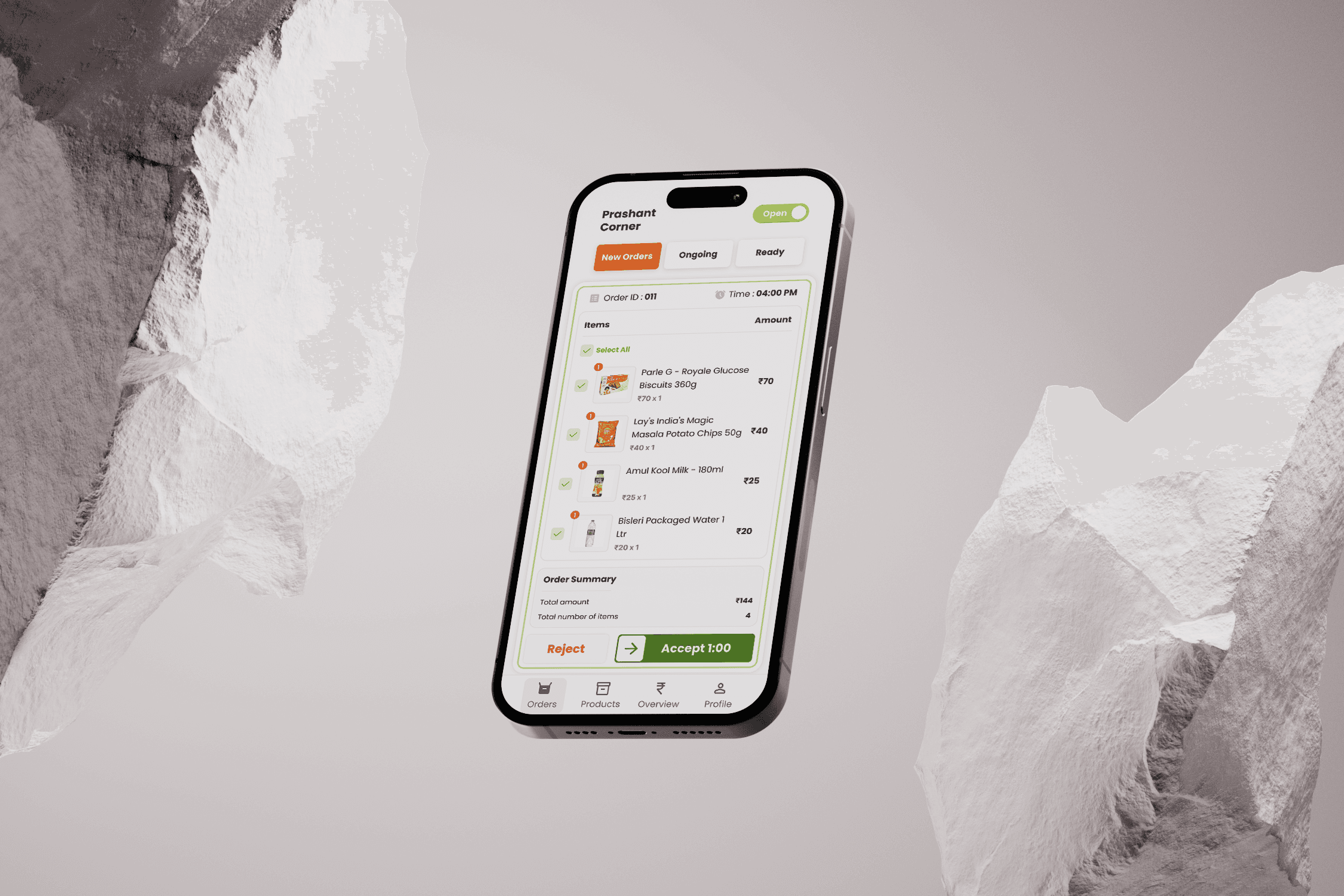
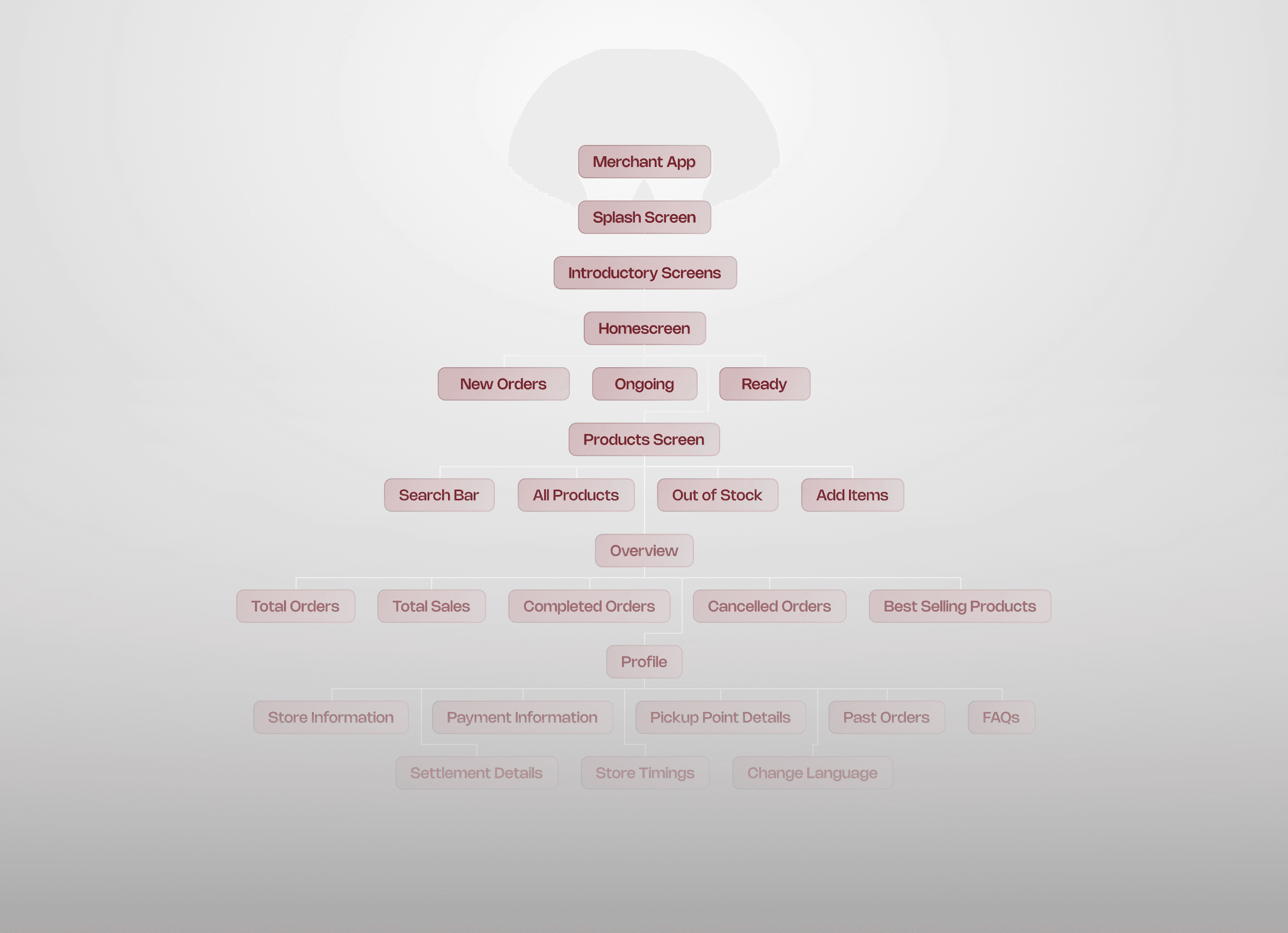
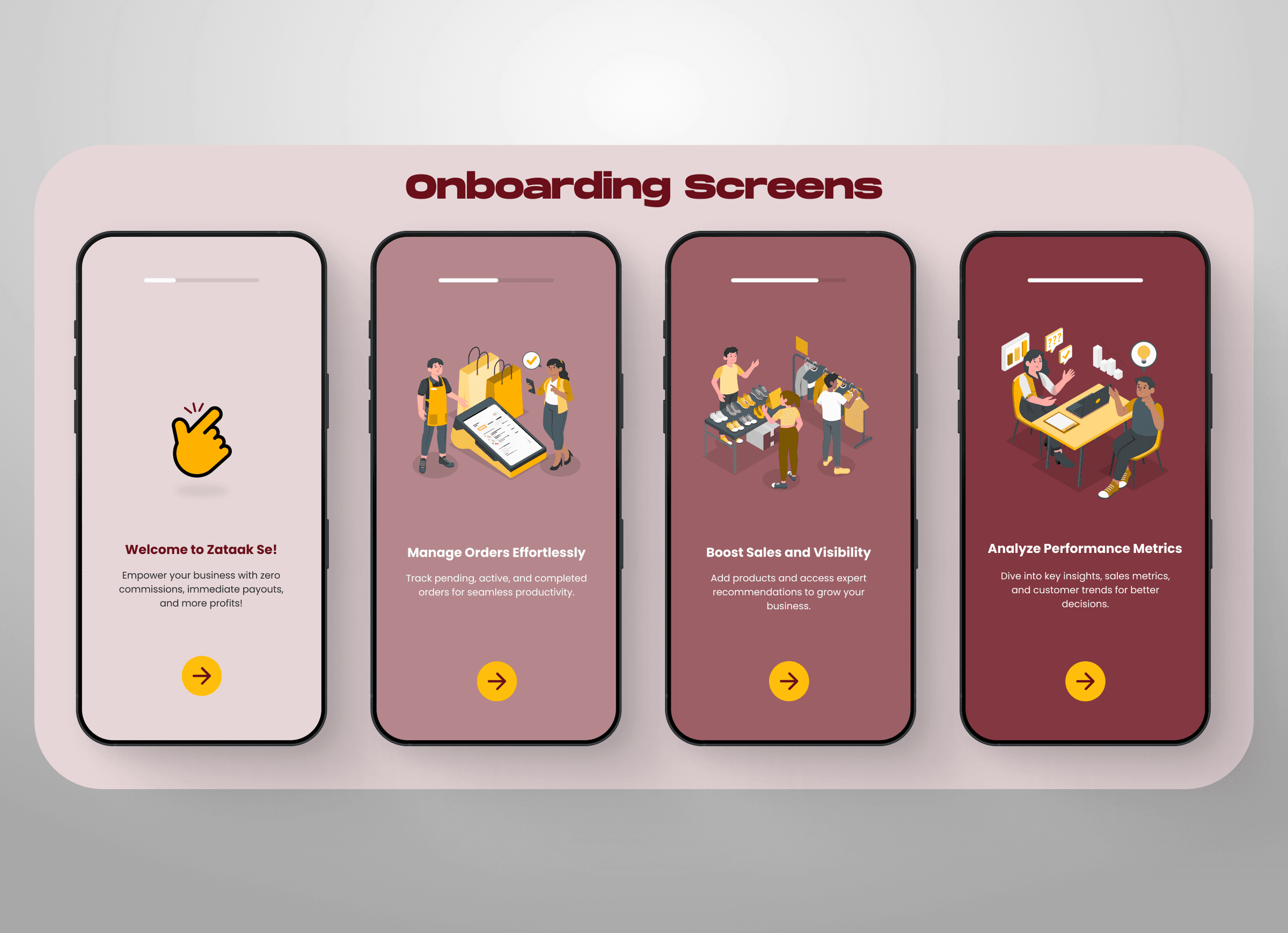
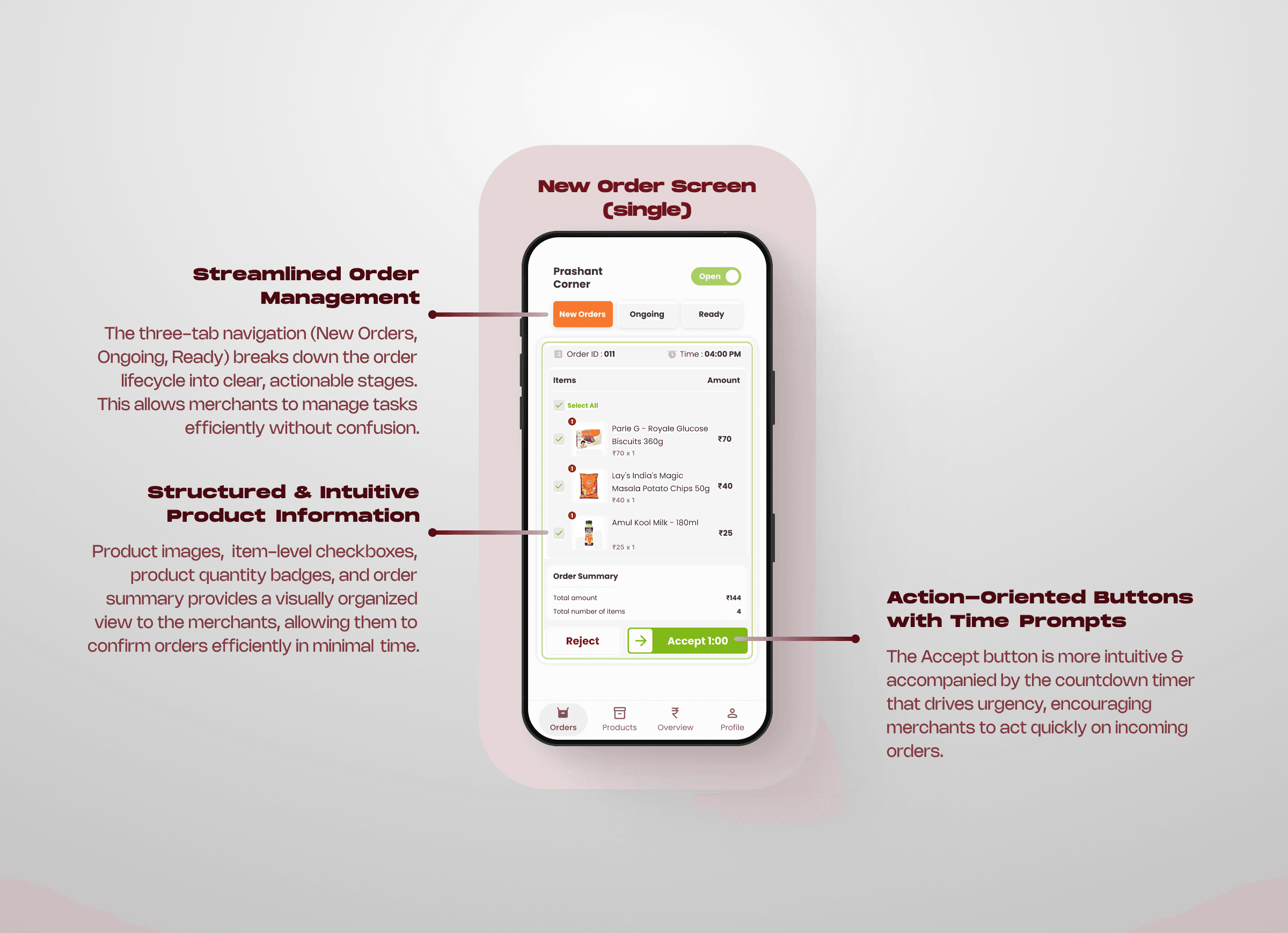
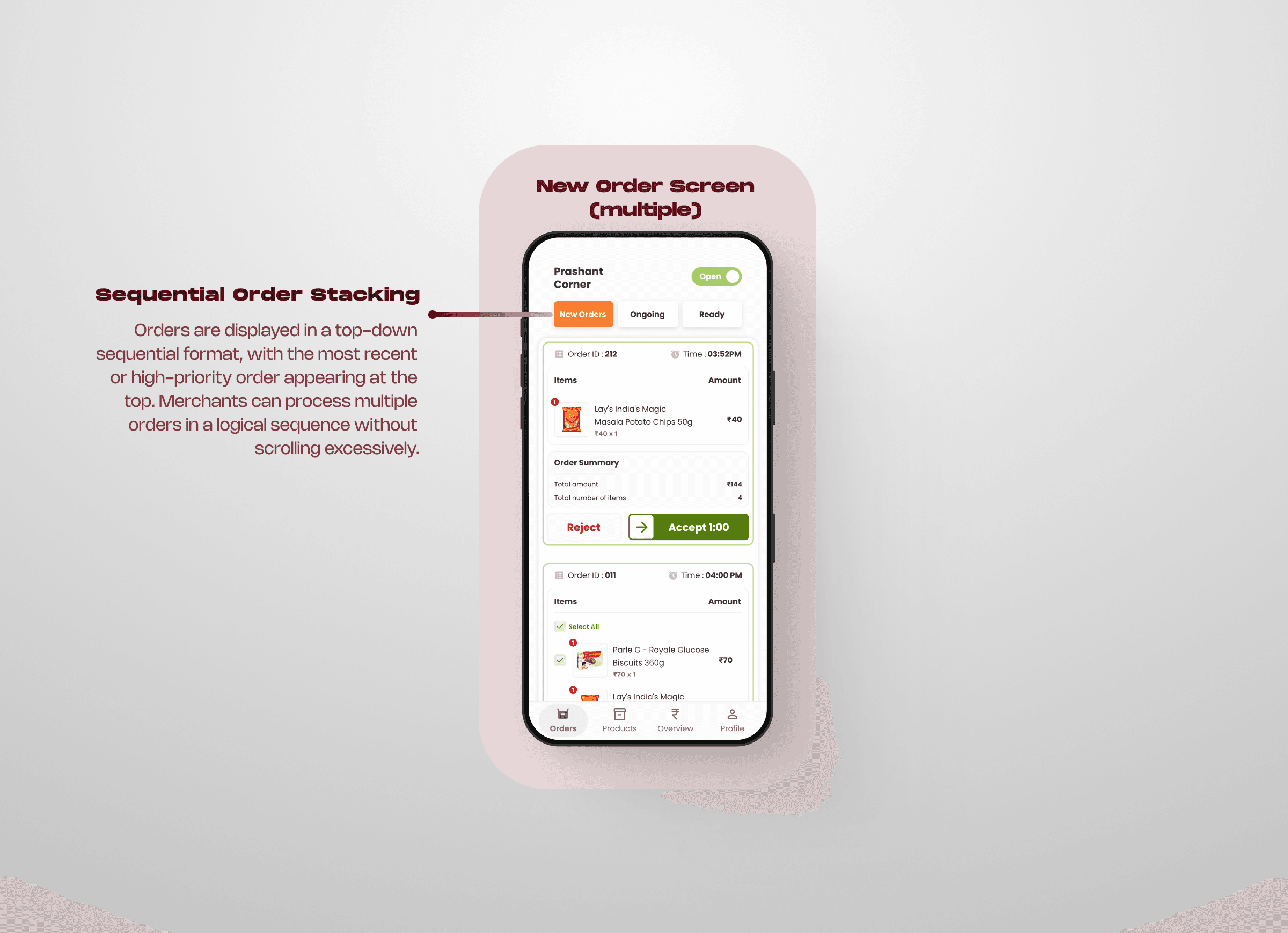
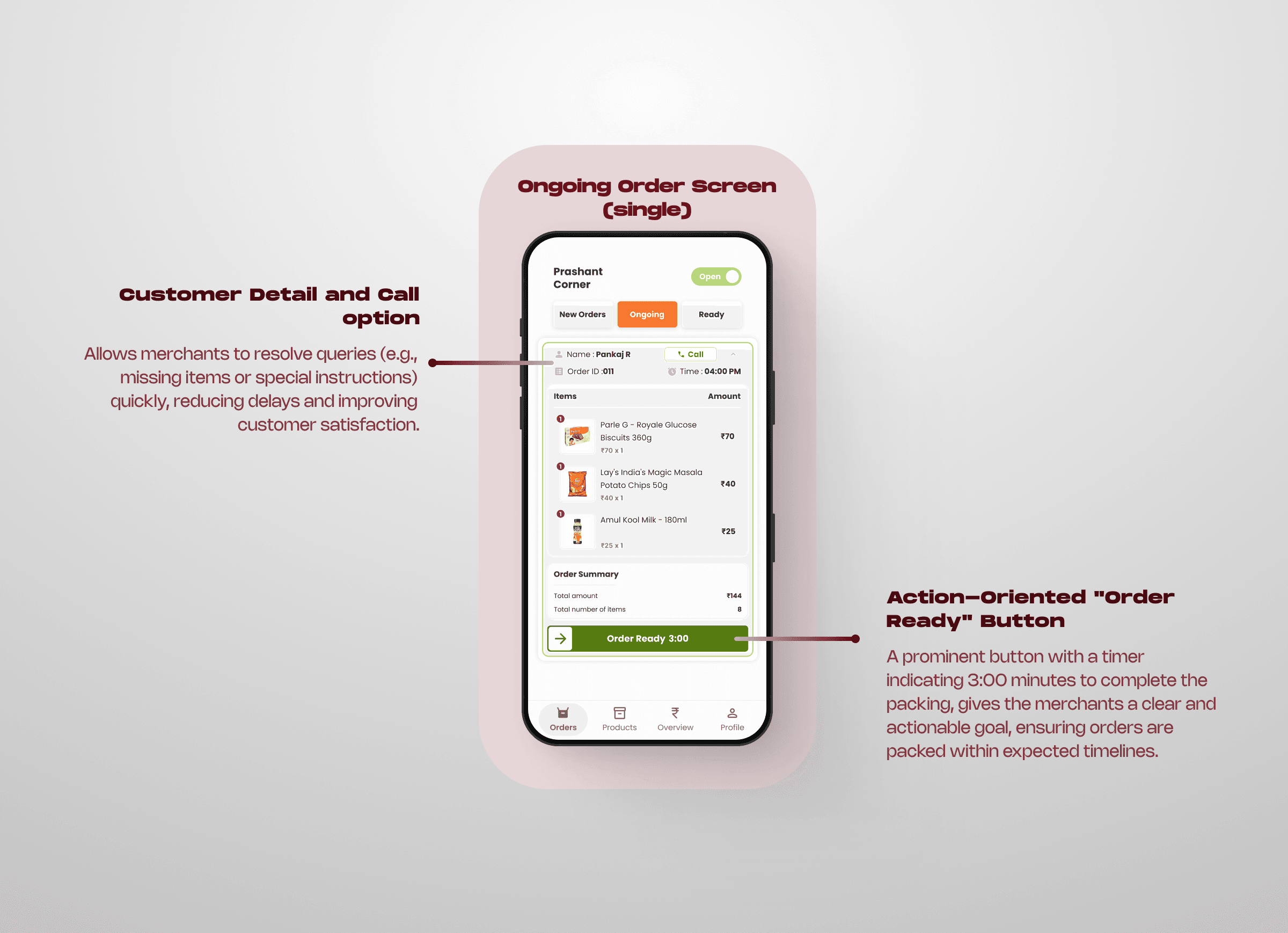
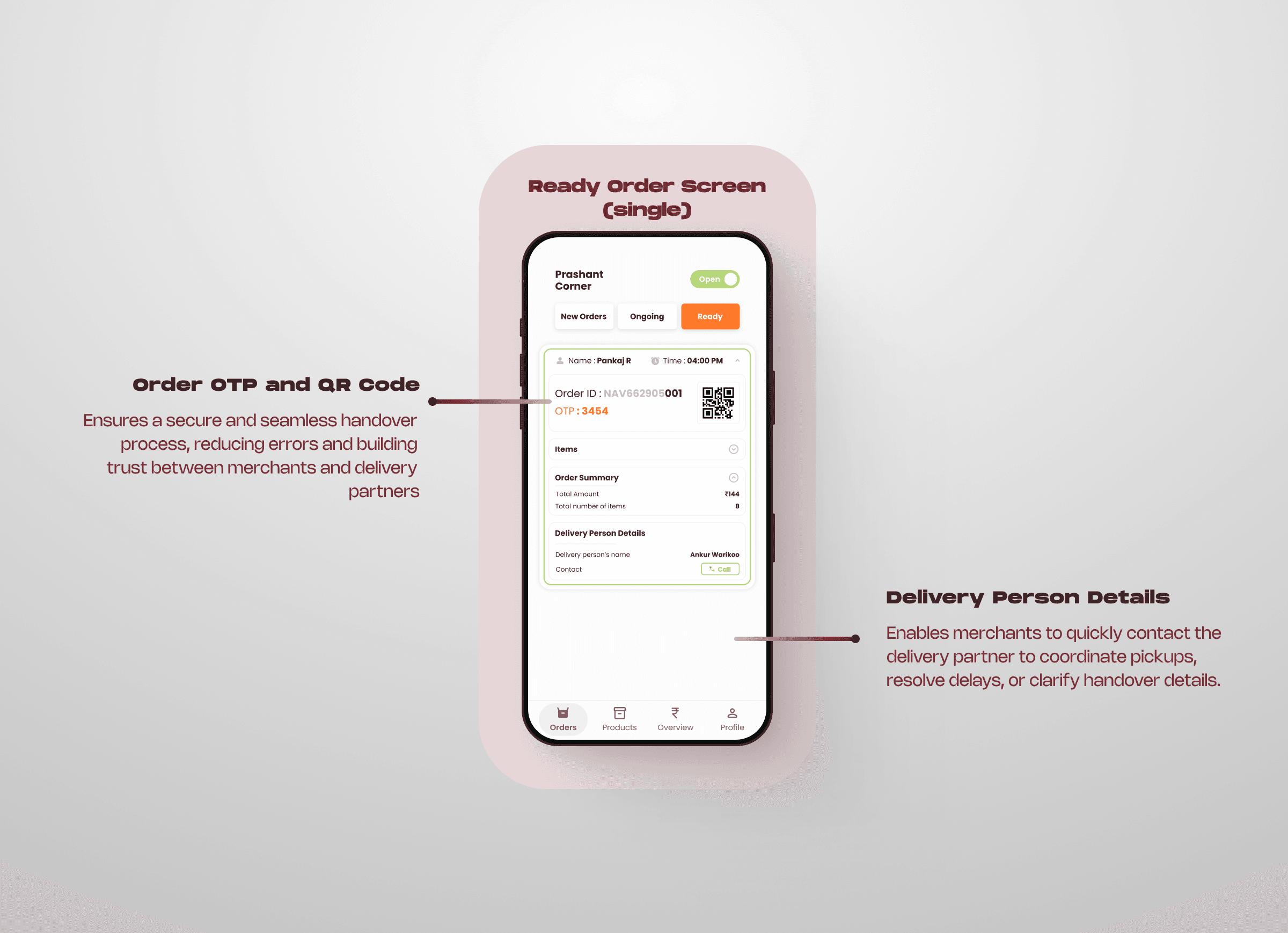
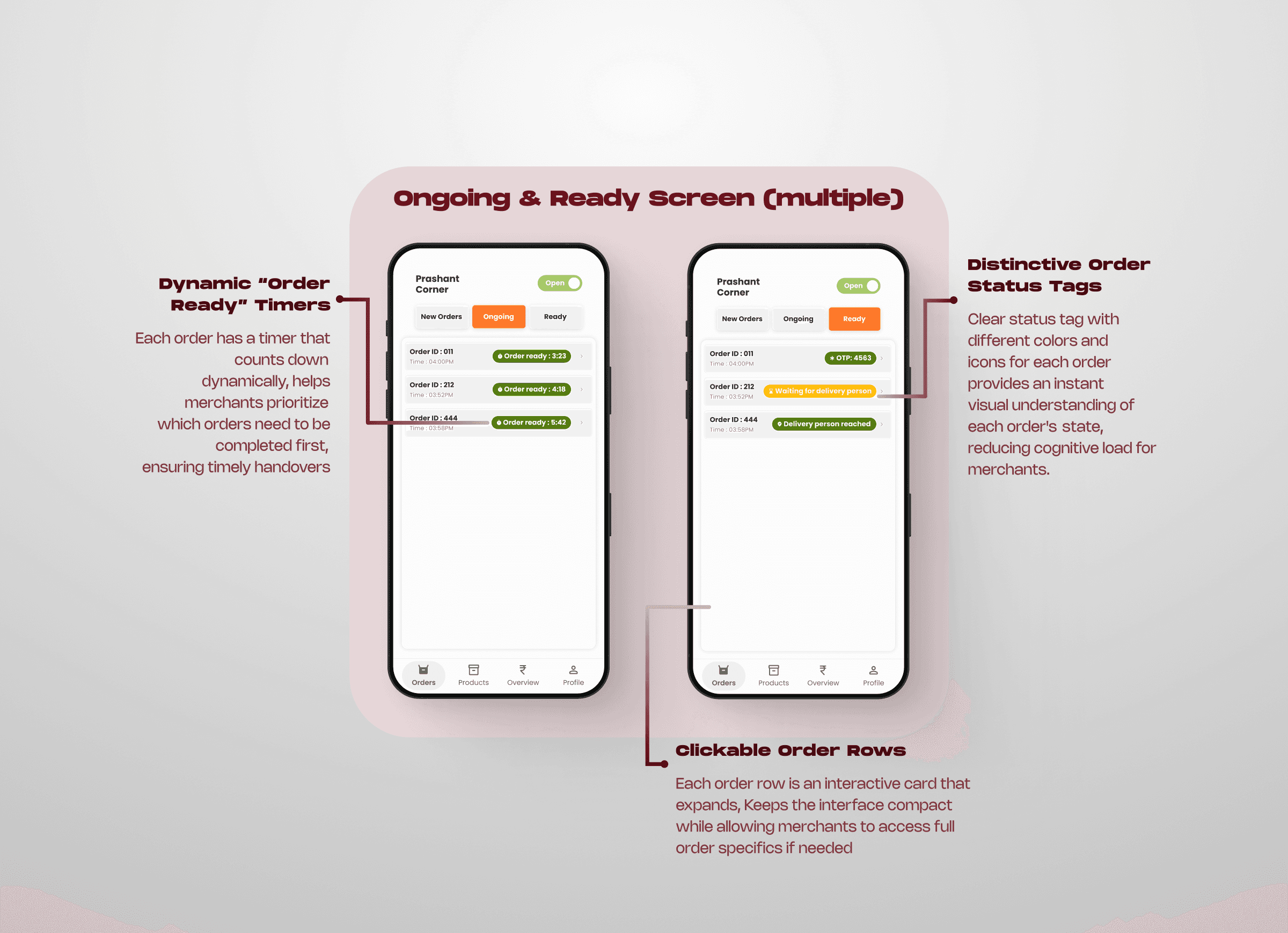
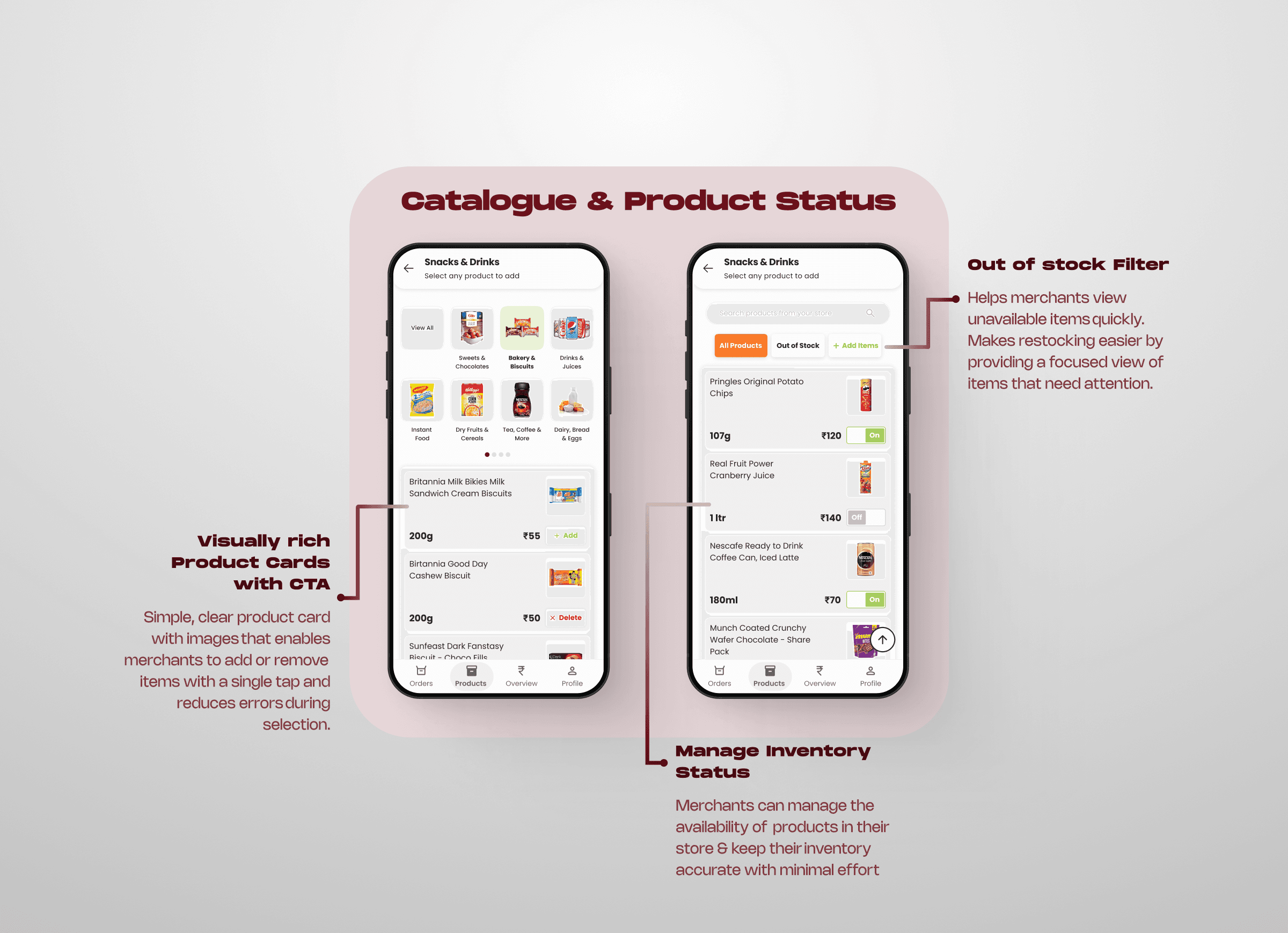
High-fidelity prototypes for key screens such as order management (New, Ongoing, Ready), product cataloging, and performance dashboards.
A Hindi version of the app to cater to merchants unfamiliar with English, ensuring inclusivity and accessibility.
Intuitive UI for merchants to accept orders, track readiness, and hand over items to delivery personnel.
What Principles I Followed:
Consistency: Unified visual language across the Merchant and Consumer apps.
Accessibility: Designed with large, readable text and thumb-friendly interactions for mobile devices.
Efficiency: Reduced merchant task completion time by simplifying actions like order acceptance to two taps.
Testing
What I Tested:
Conducted usability tests with beta merchants, iterating on feedback about navigation complexity and button placements.
A/B tested buttons, UI interfaces, and workflows for:
Simplifying order acceptance.
Identifying product quantities in an order.
Displaying multiple orders and prioritizing handovers.
What Data-Driven Refinements:
Adjusted workflows to prioritize speed, e.g., adding a “Select All” feature for bulk order preparation.
Simplified order summaries based on merchant feedback.
Solution
The final design addressed all key merchant pain points:
Simple Order Management: A three-tab workflow (New, Ongoing, Ready) streamlined order tracking.
Hindi Version: Ensured inclusivity by designing the app in Hindi, making it accessible to merchants unfamiliar with English.
Product Cataloging: Intuitive layouts allowed merchants to update inventory in minutes.
Business Insights: A performance dashboard provided metrics like top-selling products, helping merchants optimize sales.
These solutions directly tied back to merchant needs, improving efficiency and reducing confusion.
Results
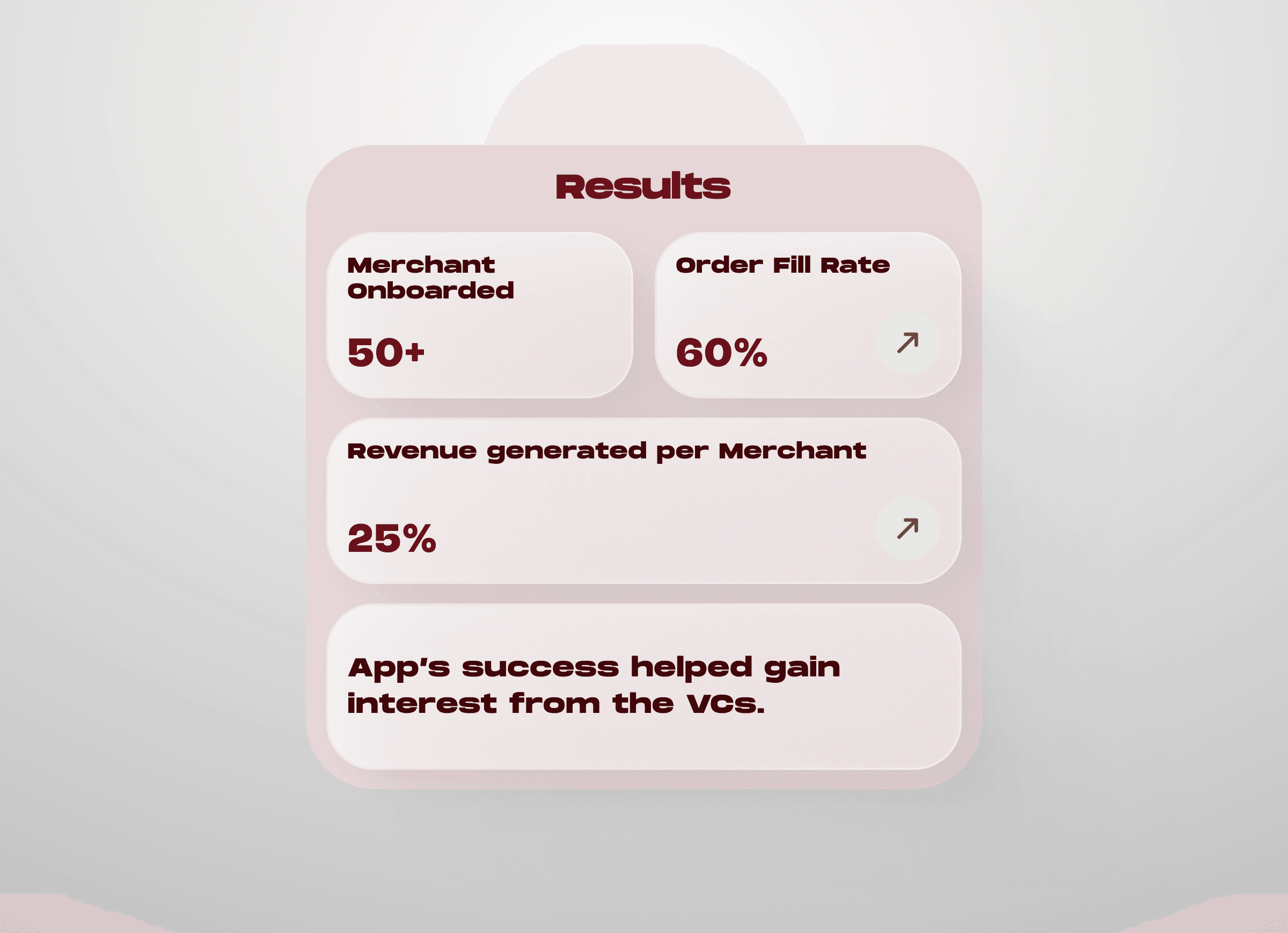
Adoption: The app onboarded 50 plus merchants.
Efficiency Gains: Merchants reduced order management time by 40%.
Revenue Generation: Early users reported an average 15% increase in revenue through additional orders.
Investor Interest: The app’s success helped the business pitch confidently to VCs, supporting their funding efforts.
Reflection
What I Learned
User-Centric Design: Listening to end-users early ensures designs solve real problems.
Iterative Processes: Continuous testing and feedback loops lead to meaningful refinements.
Collaboration: Working closely with developers ensures designs are practical and scalable.
What Feedback I Received
Merchants appreciated the app’s simplicity but requested advanced filtering options for large inventories—a feature I plan to address in future iterations.