Litscreen - Explore UI UX design patterns for Indian apps
Built a production-grade design research tool (23,212 lines across 137 files) in 8 weeks using AI-assisted development.
My Role
AI Product Manager, Product Designer & Full stack dev
Timeline & Status
Oct 2025 to Jan 2026
Tools


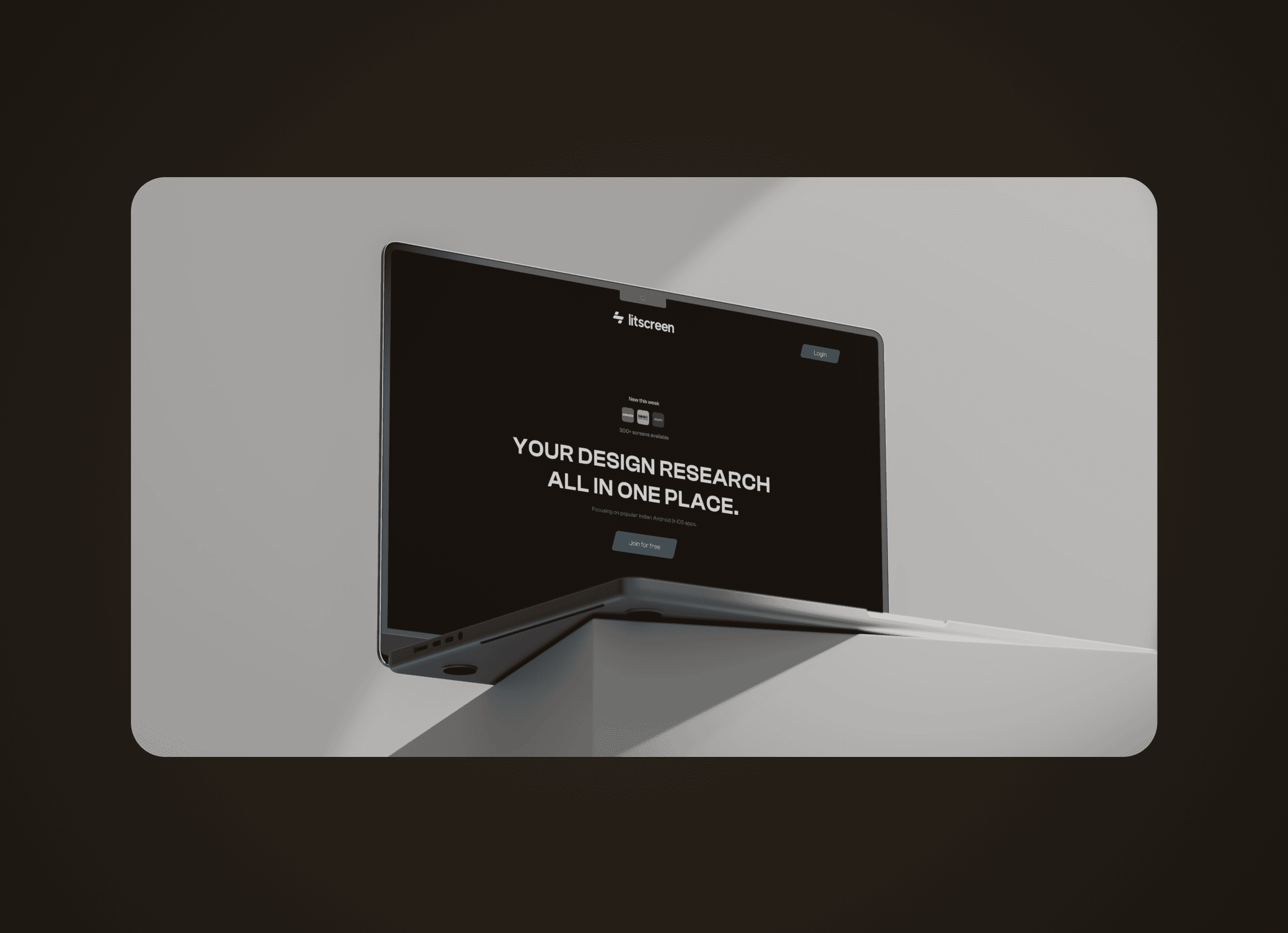
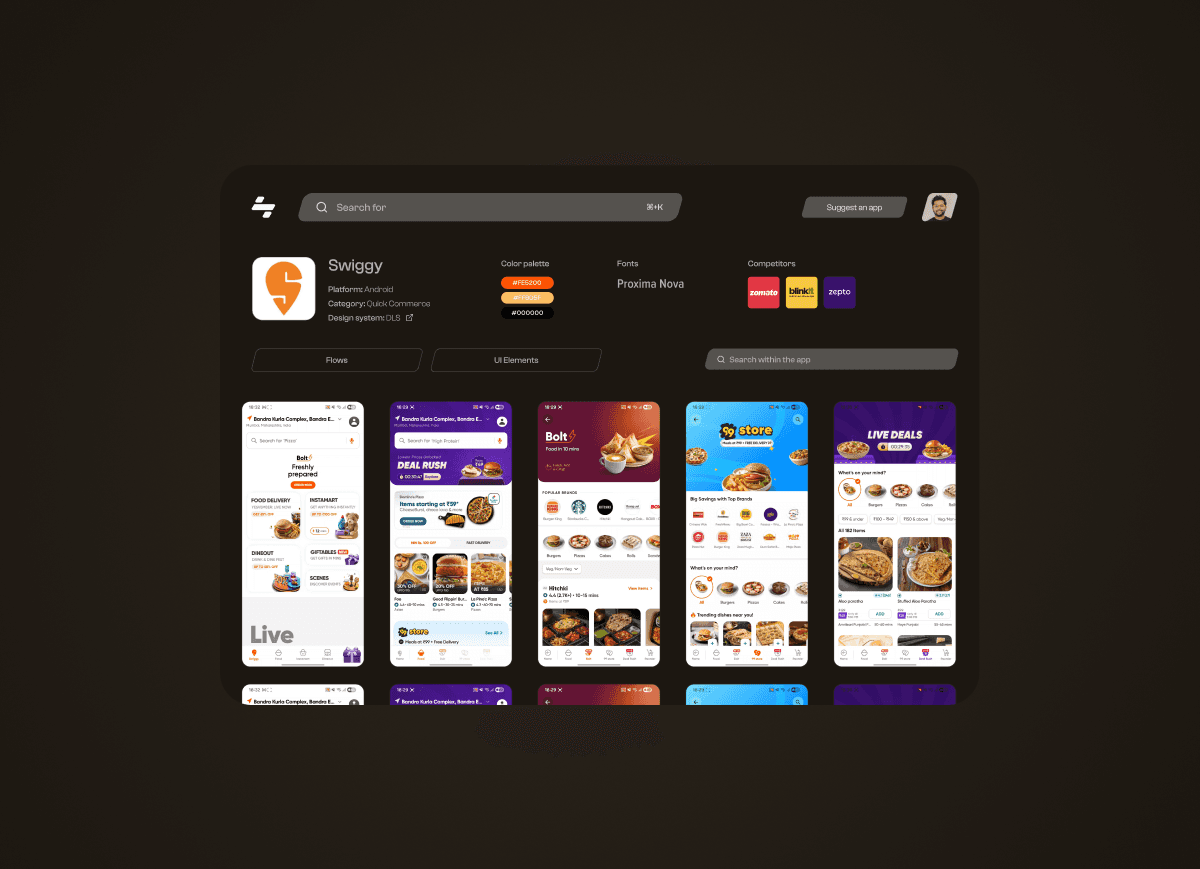
The Vision After serving as a Founding Head of Product Design in the high-stakes Quick Commerce space, I knew that the biggest bottleneck in design innovation wasn't creativity. It was research velocity. I built Litscreen to prove that an AI-native product workflow could outpace traditional teams by automating the most tedious part of the research cycle: data entry and categorization
Engineering and Infrastructure
An AI PM must be a steward of resources and security. I built Litscreen on a production-grade stack to ensure it remains sustainable as it scales:
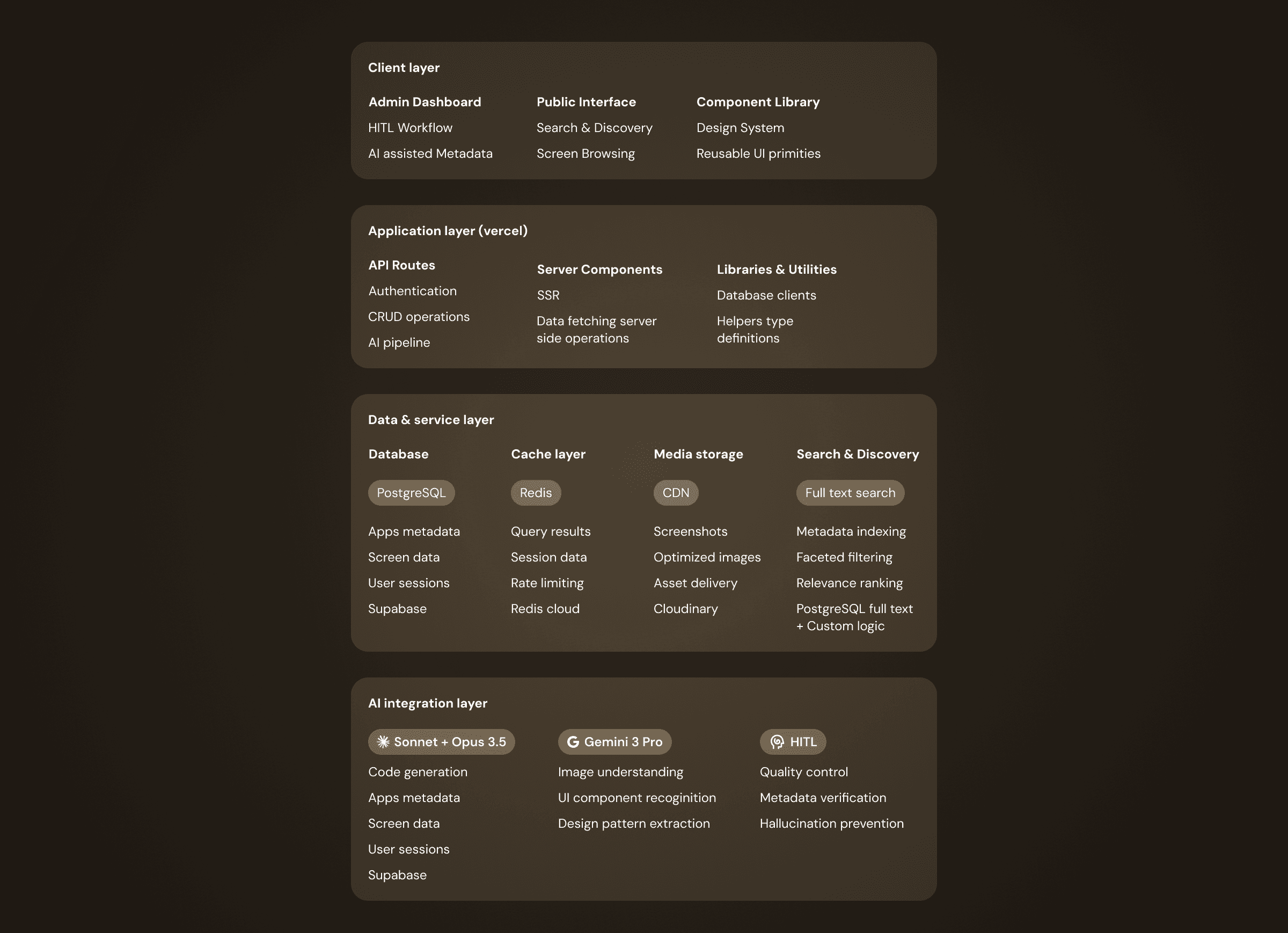
Architecture: Monolithic Next.js frontend (Vercel), Node.js backend, Supabase (PostgreSQL), Redis caching, Cloudinary CDN
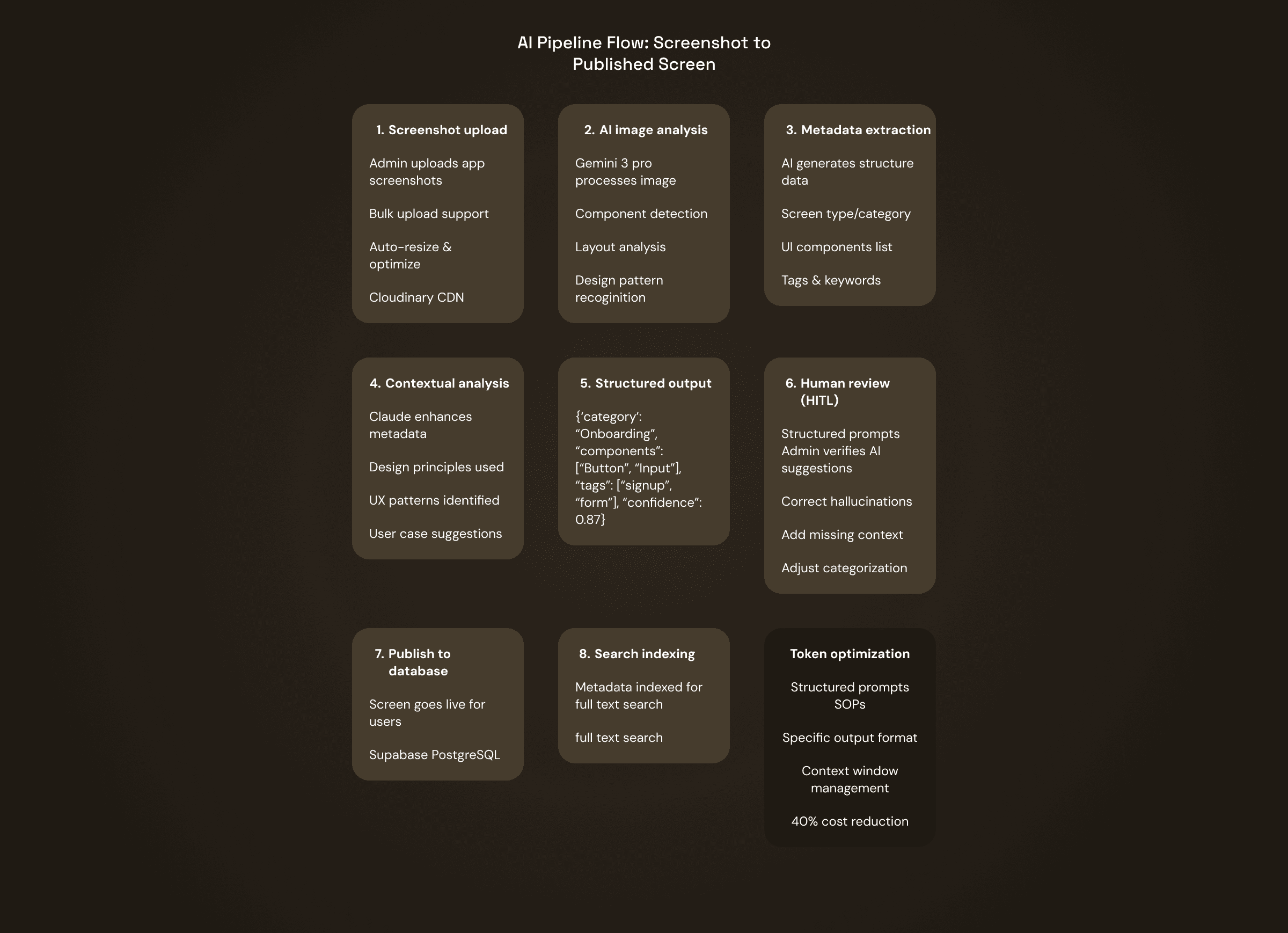
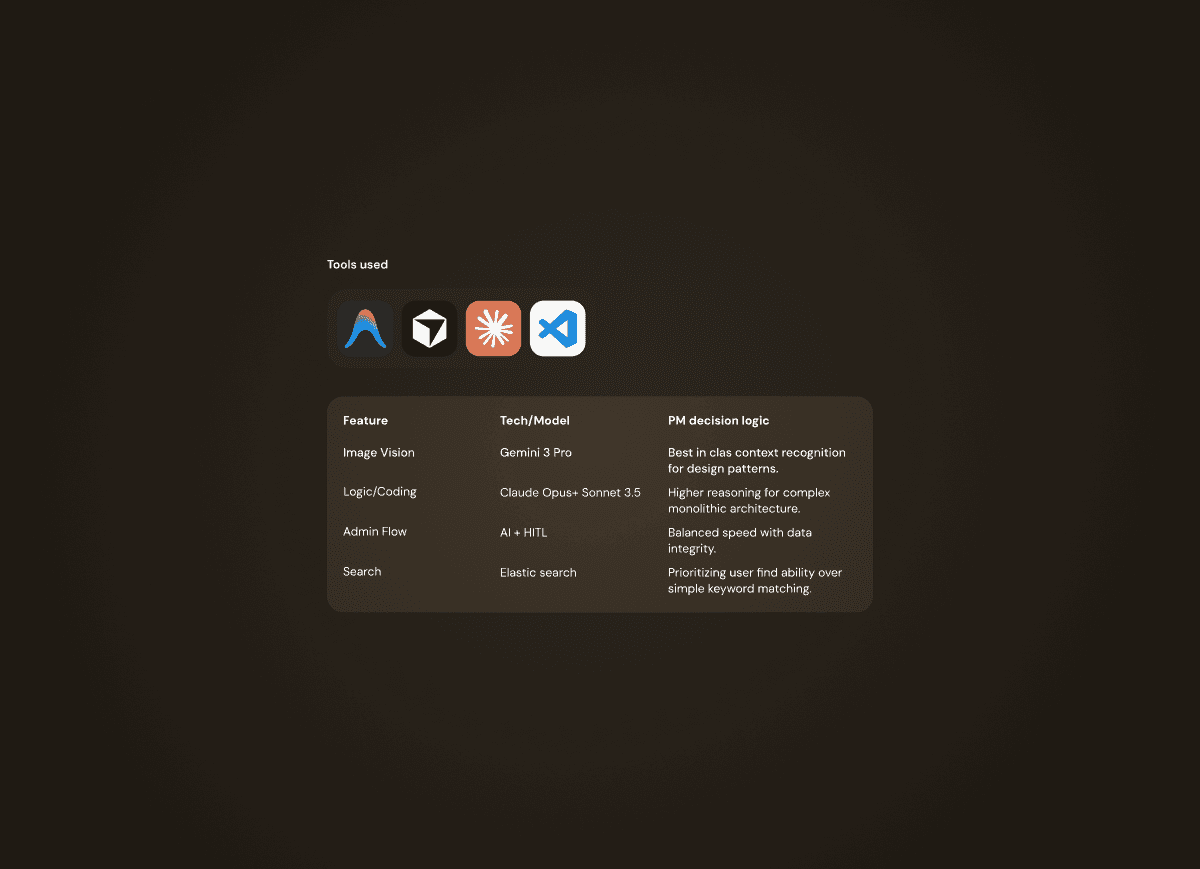
AI Implementation: Gemini 3 Pro for image recognition and contextual understanding, Claude Opus 4.5/Sonnet 4.5 for code generation and complex backend logic
Human-in-the-Loop Design: AI generates metadata suggestions, but final approval requires human verification to prevent hallucination-driven errors
Cost Management: Created SOPs for AI workflows to eliminate vagueness and reduce unnecessary token usage during scaling
Infrastructure: Utilized Supabase for robust data management and Upstash Redis for rate limiting and DDoS protection.
Multi-Model Strategy: Orchestrated Claude 3.5 Sonnet and Opus for complex logic while leveraging Gemini for vision tasks, optimizing for the right tool for the right job.
SOP-Driven Backend: I developed a Standard Operating Procedure for the backend processes. By narrowing the AI’s operational world, I minimized token waste and maximized output consistency.
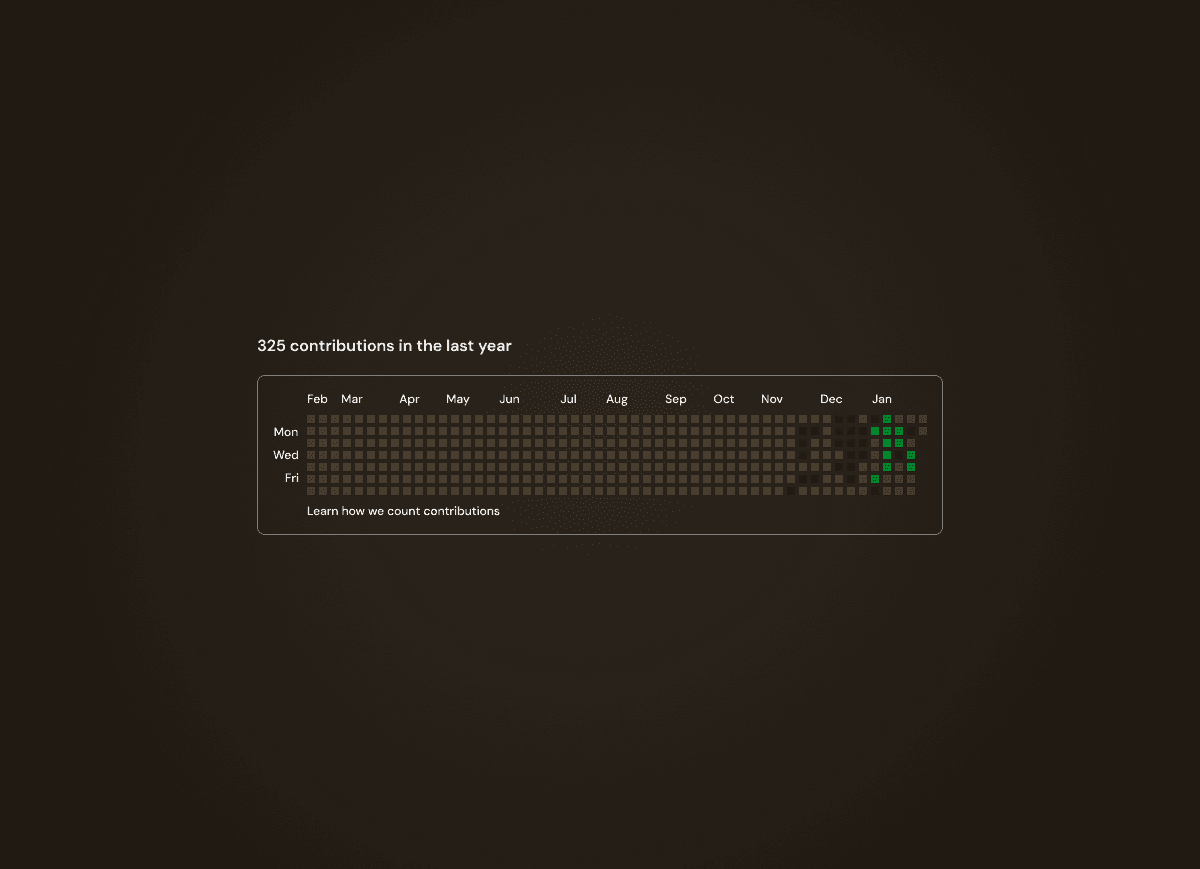
The "Step into the Shoes" Philosophy
I believe a Great PM doesn’t just manage a team. They empathize with them. To lead effectively, I spent two months stepping into the shoes of my engineering and design peers. I did not just spec the product. I built the monolithic Next.js and Node.js architecture, managed the Supabase and Cloudinary security layers, and designed the entire custom system in Figma.
PM Insight: This technical immersion allows me to write PRDs that are feasible rather than just aspirational.
Strategic AI & API Orchestration
Instead of chasing the "AI for everyone" hype, I applied AI and external integrations where they offer the highest ROI: The Admin Workflow.
The Problem: Competitive research is slowed down by manual tagging, asset fetching, and metadata entry.
The Solution: An automated pipeline using Gemini 3 Pro for high-fidelity image recognition and the Brandfetch API for instant retrieval of brand logos, colors, and fonts.
The Guardrails: Understanding that LLMs are stochastic, I implemented a Human-in-the-loop (HITL) system. The AI proposes the tags and Brandfetch provides the assets, while the admin provides the final approval to eliminate hallucinations or incorrect data before they reach the user.
Engineering and Infrastructure
An AI PM must be a steward of resources and security. I built Litscreen on a production-grade stack to ensure it remains sustainable as it scales:
Infrastructure: Utilized Supabase for robust data management and Upstash Redis for rate limiting and DDoS protection.
Multi-Model Strategy: Orchestrated Claude 3.5 Sonnet and Opus for complex logic while leveraging Gemini for vision tasks, optimizing for the right tool for the right job.
SOP-Driven Backend: I developed a Standard Operating Procedure for the backend processes. By narrowing the AI’s operational world, I minimized token waste and maximized output consistency.
The Result
23,212 Lines of Intentional Code
I moved from Figma to a live, functional MVP by writing over 23,000 lines of application logic across 137 files. This excludes dependencies and boilerplate, focusing purely on the core product:
API Layer (3,757 lines): RESTful endpoints, authentication, AI pipeline orchestration
Admin Platform (7,820 lines): Human-in-the-loop metadata workflows, bulk operations, AI tag suggestions
Component Library (7,702 lines): Custom design system implementation with reusable UI primitives
Public Interface (2,023 lines): Search, filtering, elastic discovery for design researchers
What I’m Looking For
I am seeking a home among builders and creative problem solvers, a culture where high ownership is the norm, not the exception. I thrive in environments where we don't wait for permission to innovate, but instead act as self-starters who deeply understand the business to ensure long-term sustainability. I want to work with a team that relentlessly prioritizes the user, constantly stepping into their shoes to ensure that every product decision translates into tangible value in their lives.
Why hire me as your AI PM?
I bring a unique trifecta of Founding Design leadership, Marketing strategy, and Full-stack technical empathy. I don’t just ask if we can build something. I understand the cost, the code, the user experience, and the market positioning required to make it a success.
